

How to Build a Nutritionally Balanced Vegan Meal
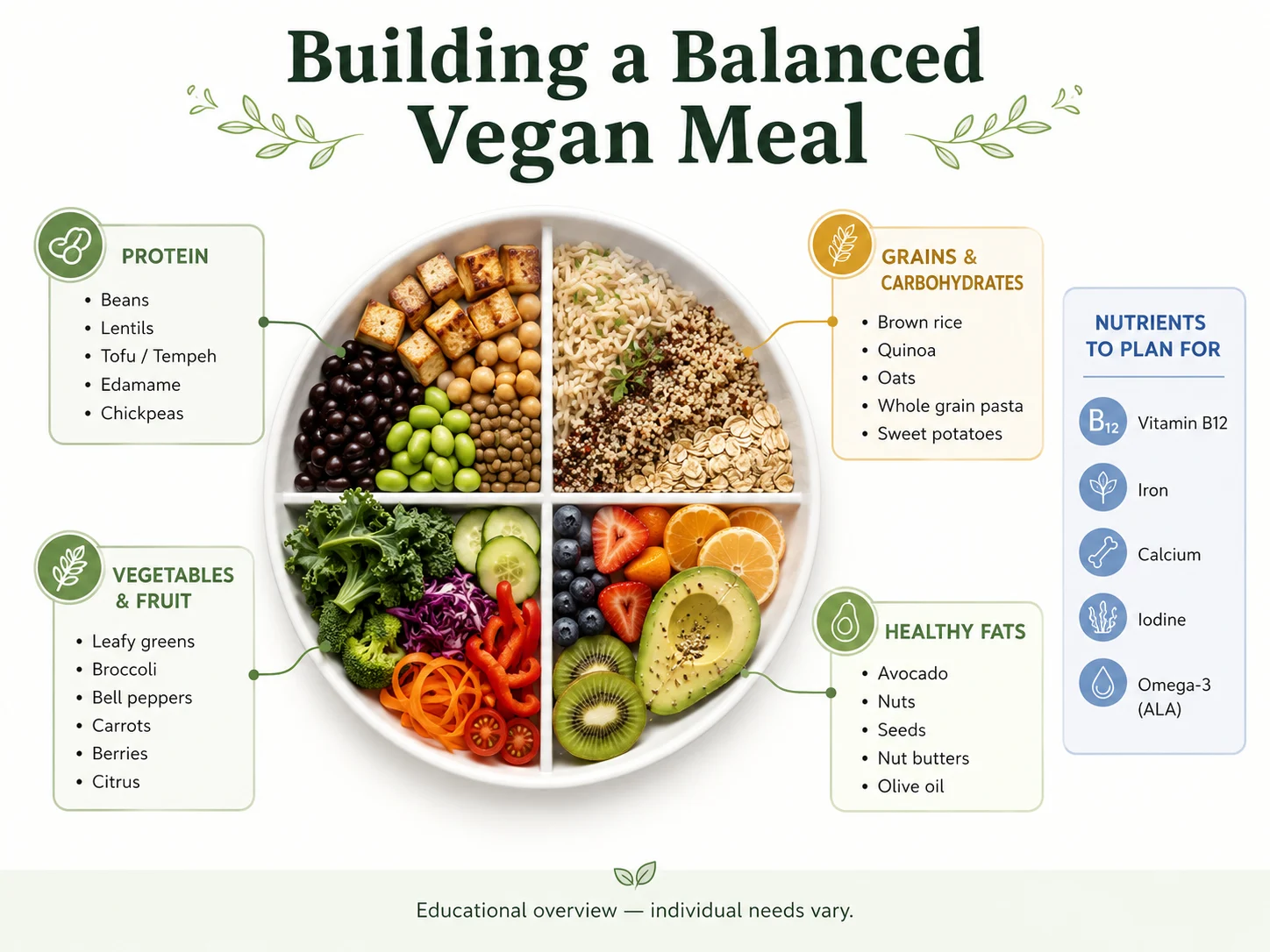
A vegan meal is not automatically healthy simply because it contains no animal products. French fries, sweetened drinks, and highly processed snacks can be vegan while providing little protein, fibre, or micronutrient value. A balanced vegan diet requires variety, sufficient energy, dependable sources of important nutrients, and realistic planning. The foundation of a satisfying meal is usually a combination of protein-rich foods, grains or other carbohydrates, vegetables and fruit, and sources of healthy fat. Plant protein can come from beans, lentils, chickpeas, tofu, tempeh, edamame, peas, nuts, seeds, and some meat alternatives. Different plant foods contain different amounts and combinations of amino acids, but most adults do not need to combine specific proteins at every meal. Eating a varied diet with enough total protein and energy across the day is more important. People with high activity levels, older adults, growing teenagers, and anyone eating relatively few calories may need to pay closer attention to protein quantity and meal distribution. Carbohydrates provide energy and should not be treated as nutritionally empty by default. Oats, brown rice, quinoa, whole-grain bread, potatoes, corn, and whole-grain pasta can provide fibre, minerals, and sustained energy. The amount required depends on activity, body size, health, and individual goals. Vegetables and fruit contribute fibre, vitamins, minerals, and a wide range of plant compounds. Using several colours and types is a simple way to increase variety, but one meal does not have to contain every possible vegetable. Frozen and canned produce can be useful, affordable options. Canned beans and vegetables can be rinsed when lower sodium is preferred. Fat is also necessary. Nuts, seeds, avocado, olive oil, and nut butters provide energy and help with absorption of fat-soluble vitamins. Ground flaxseed, chia seeds, hemp seeds, walnuts, and rapeseed oil provide alpha-linolenic acid, a plant omega-3 fatty acid. Vitamin B12 requires special attention because reliable natural plant sources are limited. Vegans generally need foods fortified with B12 or an appropriate supplement. Depending on the country and individual diet, vitamin D, iodine, calcium, iron, zinc, and long-chain omega-3 intake may also require planning. Fortified plant drinks can provide calcium, vitamin D, B12, iodine, and other nutrients, but products vary widely. The label should be checked rather than assuming every oat, soy, almond, or pea drink is nutritionally equivalent. Unsweetened fortified options may be useful for people who consume them regularly. Calcium can also come from calcium-set tofu, fortified foods, tahini, pulses, and certain green vegetables. Iron is present in lentils, beans, tofu, seeds, whole grains, and leafy vegetables, but plant iron is generally absorbed less efficiently than iron from meat. Eating a source of vitamin C, such as peppers, citrus fruit, berries, tomatoes, or broccoli, with an iron-rich meal can improve absorption. Tea and coffee consumed with meals may reduce absorption for some people, so those with low iron status may choose to separate them from major meals. Iodine deserves attention because seaweed can contain extremely variable amounts, sometimes far more than needed. Depending on local food fortification and medical advice, a measured supplement or fortified food may provide more predictable intake than frequent high-iodine seaweed. Individual requirements change during pregnancy, breastfeeding, childhood, older age, illness, or intense athletic training. People with allergies, digestive diseases, eating disorders, or diagnosed deficiencies should seek individualized professional guidance rather than copying a generic plate. A practical balanced meal might combine lentil curry, brown rice, vegetables, and tahini; tofu with noodles and mixed vegetables; or beans, roasted potatoes, salad, and avocado. The exact foods can reflect local culture and budget. Nutritional quality does not require expensive substitutes or imported superfoods. Beans, grains, seasonal vegetables, fortified staples, nuts, and seeds can form the basis of a healthy pattern. The strongest vegan diet is not defined by perfection at every meal. It is defined by a repeatable pattern that provides enough food, includes reliable B12, uses varied protein sources, plans for key nutrients, and remains enjoyable enough to continue.
Sources: UK National Health Service, “The Vegan Diet”; UK Scientific Advisory Committee on Nutrition and Committee on Toxicity assessment of plant-based drinks; official public-health guidance on vegetarian and vegan nutrition.
Image caption: A practical meal-building guide showing plant protein, grains, vegetables, fruit, healthy fats, and nutrients that require particular attention in a vegan diet.
Image alt text: A divided plate containing beans, tofu, grains, vegetables, fruit, and avocado, surrounded by lists of vegan protein, carbohydrates, produce, fats, and key nutrients.