

Why Vitamin B12 Needs a Reliable Plan on a Vegan Diet
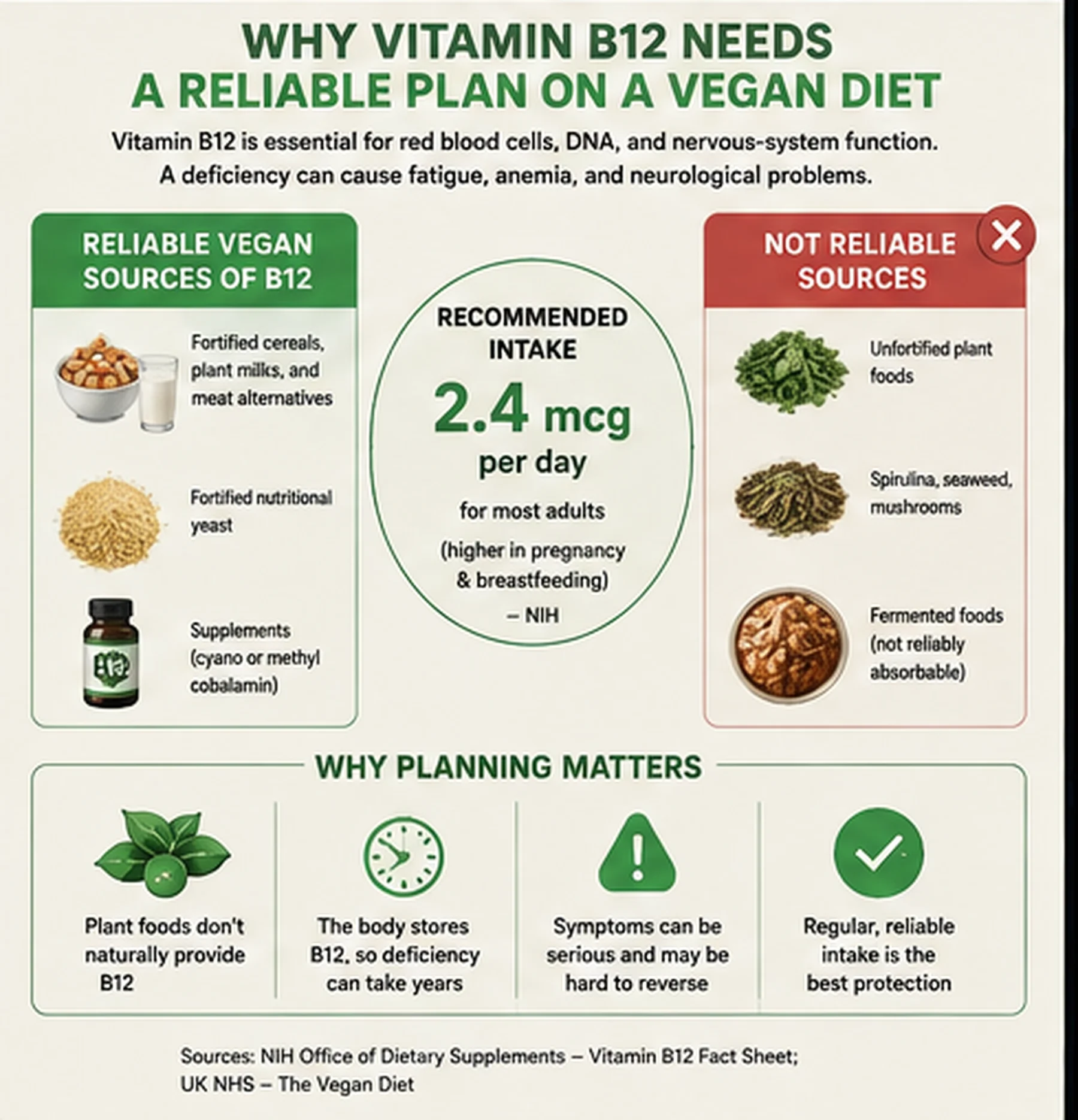
Vitamin B12 is one of the few nutrients that people following a vegan diet should not leave to chance. A varied plant-based diet can provide protein, fibre, carbohydrates, fats, iron, folate, and many other nutrients, but unfortified plant foods do not naturally provide dependable amounts of vitamin B12. Reliable vegan sources are fortified foods and vitamin B12 supplements. Vitamin B12 contributes to normal red blood cell formation, DNA production, and nervous-system function. A deficiency can lead to megaloblastic anaemia, fatigue, weakness, numbness, balance problems, memory changes, and other neurological symptoms. Some effects may become difficult to reverse when deficiency continues for a long period. The difficulty is that the body stores vitamin B12, so symptoms may take years to appear. A person can feel healthy after adopting a vegan diet while gradually using stored B12. The absence of immediate symptoms is therefore not proof that intake is adequate. The U.S. National Institutes of Health lists a recommended dietary allowance of 2.4 micrograms per day for most adults, with higher requirements during pregnancy and breastfeeding. This number describes the amount the body requires, not necessarily the amount that must appear in a supplement tablet. Vitamin B12 absorption changes depending on the dose, frequency, food source, and a protein called intrinsic factor. High-dose supplements contain much more than the daily requirement because only a portion is absorbed. People should therefore follow the instructions of a reliable product or healthcare professional rather than attempting to design a dosage by comparing the label directly with the daily requirement. Fortified foods can include breakfast cereals, plant-based drinks, meat alternatives, and nutritional yeast. Fortification varies by product and country. Two cartons of oat or soy drink may look similar while only one contains vitamin B12. Labels should state the amount per serving and the number of servings needed to provide a meaningful intake. Products can also change their recipes, so a food that was fortified last year may not remain fortified permanently. Nutritional yeast is not automatically a B12 source unless the vitamin was added. The label matters more than the product name. Fermented foods, spirulina, seaweed, mushrooms, and unfortified plant foods should not be treated as reliable substitutes. Some may contain compounds that resemble vitamin B12 but do not perform the same biological function. Depending on uncertain natural traces creates an avoidable risk when measured fortified foods and supplements are widely available. This does not mean every vegan must use the same product or schedule. Some people consume fortified food several times each day, while others use a supplement. The important point is regular, reliable intake. Risk is not limited to vegans. Older adults, people with pernicious anaemia, gastrointestinal conditions, previous stomach or intestinal surgery, and people using certain medications may have difficulty absorbing B12 even when their diet contains it. Vegetarians who consume limited eggs or dairy may also have inadequate intake. Someone with an absorption disorder may require medical treatment rather than an ordinary over-the-counter supplement. Blood testing can be appropriate when a person has symptoms, inconsistent intake, a relevant medical condition, or concern about deficiency. A single serum B12 measurement may sometimes require interpretation with other markers, symptoms, and medical history. Online advice cannot diagnose a deficiency. Neurological symptoms, severe fatigue, persistent weakness, or concerns during pregnancy and childhood should be discussed with a qualified healthcare professional. Infants and children need particular attention because their requirements, products, and consequences of deficiency differ from those of adults. Breastfeeding parents following a vegan diet must maintain reliable B12 status because an infant depends heavily on breast milk or an appropriately fortified formula. A vegan diet does not become nutritionally inadequate merely because B12 requires planning. Many diets rely on fortification and supplementation. Iodine is added to salt in many countries, vitamin D is added to foods, and folic acid fortification is used to reduce neural-tube defects. Using a reliable B12 source is a practical public-health measure, not a failure of the diet. The real danger is assuming that eating vegetables, legumes, and whole grains automatically covers every nutrient. A responsible vegan diet combines the strengths of plant foods with direct planning for nutrients that are not reliably present. For vitamin B12, the rule is simple: use a source that clearly states how much B12 it provides, consume it consistently, and seek medical guidance when absorption, symptoms, pregnancy, childhood, or an existing condition makes the situation more complex.
Sources: U.S. National Institutes of Health Office of Dietary Supplements, “Vitamin B12 Fact Sheet for Health Professionals”; UK National Health Service, “The Vegan Diet.”
Image caption: A guide showing that reliable vegan sources of vitamin B12 are fortified foods or supplements, while unfortified plant foods should not be assumed to provide adequate B12.
Image alt text: Infographic comparing reliable vegan vitamin B12 sources with foods that should not be treated as dependable sources and explaining why B12 matters.